Family life insurance
Life insurance that helps your family keep up with the mortgage, bills and childcare if you die while your children are growing up.
- Quick 3 step process
- 60 second form
- Free quotes, no obligation
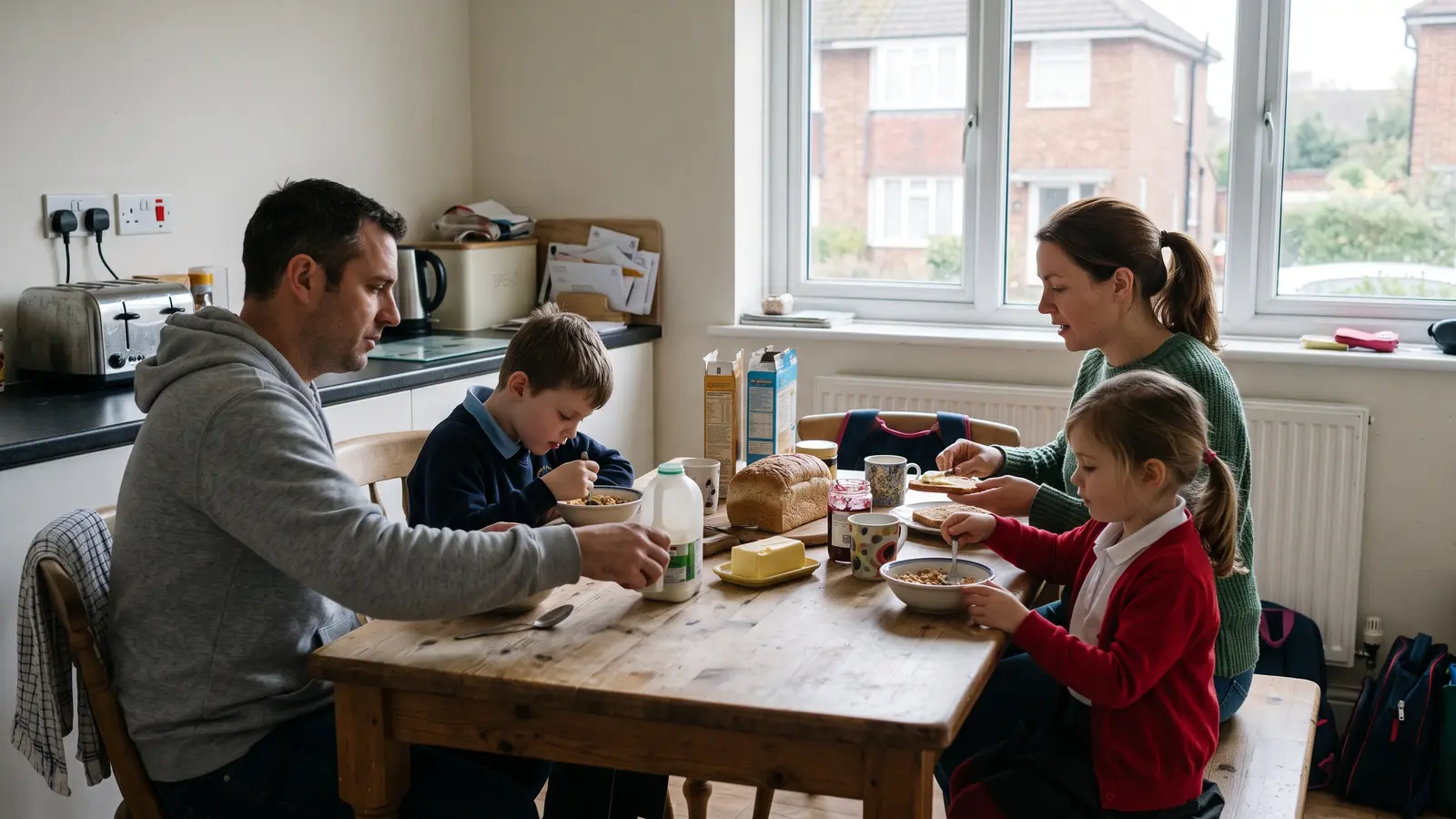




What is family life insurance?
Family life insurance isn’t a separate type of policy. It’s life cover for the people who rely on you, usually your children and your partner, in case you die while they still depend on your income or your care. Term life insurance suits this: it runs for a set number of years, such as until your youngest child has grown up or your mortgage is paid off.
It pays your dependants a lump sum or regular payments when you die. It matters most while your children are young, and good times to think about it are when you marry, buy a home or have children.
It pays out only if you die. If illness or disability stops you earning, that’s what income protection and critical illness cover are for.
Ways to protect your family
You can use one policy or combine several. These are the main types of cover families compare.
How much life cover does a family need?
The amount you need depends on your debts, your mortgage or rent, your income and how many children or other dependants you have. Start by adding up what the money would need to pay for:
- the mortgage and other debts, so your family could stay in your home
- everyday living costs: your take-home pay for each year your family would rely on it, for example until your youngest child finishes full-time education
- childcare, so the parent left behind could keep working (average prices are below)
- one-off costs, such as a funeral
Then take away your savings and any cover you already have. Employee packages often include death in service benefit, cover linked to your salary, but it stops if you leave that job. Our life insurance calculator does these sums for you.
If covering everything would cost more than you can afford, decide what matters most or choose a lower level of cover: some protection may be better than none.
Cover for both parents

If a parent who stays at home or works part time died, your family would lose the care they give as well as any income. A single parent has no second income to fall back on. Life insurance could give whoever ends up caring for your children money for their living costs.
Our guides to life insurance for mums and life insurance for dads cover how much each parent might need and for how long. For cover on your own mum or dad, see life insurance for parents.
Cover for new parents
When your family grows, check that any cover you already have still fits. Some policies let you increase it after a birth or adoption without new medical questions: within six months at Legal & General, and within 90 days on Zurich Life Protection.
Aviva’s Free Parent Life Cover gives each parent £15,000 of free life cover for each child under four. It lasts 12 months and pays out if the parent dies in that time, and it’s for permanent UK residents aged 18 to 66. Tesco Insurance introduced it with Aviva on 6 July 2026. As it lasts a year, it doesn’t replace cover that runs until your children have grown up.
What childcare costs
Childcare can be a large part of what a payout has to cover. These are average weekly prices in England from Coram’s Childcare Survey 2026; the nursery and childminder prices are for families who don’t qualify for the funded hours for working parents.
- Nursery, 25 hours, child under two
- £188.75
- Childminder, 25 hours, child under two
- £155.28
- Nursery, 50 hours, child under two
- £372.06
- After-school club, a week
- £69.38
Working parents who qualify for the 30 funded hours in England pay much less: Coram says part-time childcare is now, in theory, free for them in term time. Prices differ across Great Britain too: for a child under two, 25 hours a week at a nursery averages £133.08 in Scotland and £163.33 in Wales.
How family income benefit works
Family income benefit is a type of term insurance that pays your dependants regular payments, instead of a lump sum, if you die during the term.
Payments start when a claim is accepted and stop when the policy was due to end. On Aviva’s family income cover, for example, a claim in the early years pays more in total than one near the end. In Zurich’s example, a policy paying £1,000 a month with 8 years and 2 months left to run pays £98,000 in total. Our family income benefit calculator works out the total for your own income and term, and how it falls each year.
The money arrives monthly, like the income it replaces. Zurich says its Family Income Cover isn’t suitable for a one-off payment such as a mortgage, so you might pair it with decreasing term cover for the mortgage. LV= does it differently: its Pay My Mortgage facility lets beneficiaries have some or all of the monthly income paid straight to their mortgage lender.
When you compare policies, check whether the income stays level or rises each year, and whether your family could swap the payments for a lump sum. Where they can, the lump sum is less than the payments would have added up to.
Insurers that offer family income benefit
These are the insurers we’ve reviewed whose life cover can pay a monthly income. Not all of them call it family income benefit, and some sell it only through financial advisers. A dash means we haven’t confirmed that detail.
| Insurer | How it pays out | Level or increasing | Ages, terms and amounts |
|---|---|---|---|
| Aviva Through advisers | Life Insurance+ family income cover: equal monthly amounts from when a claim is accepted until the end of the term. After a claim it can be changed to a lump sum, which will be less than the monthly payments in total | Level: the monthly amount stays the same | Not confirmed |
| Bank of Scotland | Scottish Widows Protect Life Cover: a lump sum or monthly cash sums | Level cover can pay monthly family income benefit | £5,000 to £900,000 a year on level cover |
| Forester Life | Personal Insurance: a lump sum, or an annual benefit paid in monthly instalments until the end of the term. You choose when you apply and can’t change it later | The annual benefit rises each year with RPI, by up to 10% | At least 5 years; Life Benefit can run to age 85 |
| Guardian Only through financial advisers | Life Protection with Family Income Benefit: a regular income for the rest of the term instead of a lump sum | Level only | From £2,500 a year; 5 to 72 years, ending by age 90 |
| Legal & General Through financial advisers | Family and Personal Income Plan: a monthly benefit until the policy ends | Level, or the Increasing Family and Personal Income Plan | Up to £10,000 a month (£4,000 with critical illness cover); buy by 64; 5 to 40 years, ending before 70 |
| Lloyds Bank | Scottish Widows Protect Life Cover: a lump sum or monthly cash sums | Not confirmed | With monthly cash sums, the maximum cover is divided by the number of months the policy runs |
| LV= With or without advice | Family Income Benefit: a tax-free monthly income until the end of the term, on death or terminal illness. It can be converted to a reduced lump sum during a claim | Level or inflation-linked | Ages 17 to 84 (level) or 17 to 79 (inflation-linked); 5 to 50 years |
| NFU Mutual With or without advice from NFU Mutual | Aviva Life Insurance+ family income cover: equal monthly amounts until the end of the policy term | Level, or rising each year by 3% or 5% | Not confirmed |
| Royal London Only through a financial adviser | Personal Menu Plan Life Cover: a lump sum or a regular income on death or terminal illness | Level or increasing monthly income (not with decreasing or joint life second event cover) | Not confirmed |
| Scottish Widows | Scottish Widows Protect: life cover can pay a lump sum or monthly family income benefit | Level or increasing | £5,000 to £900,000 a year level, or up to £360,000 increasing; up to £150,000 a year with critical illness cover |
| Zurich Through advisers | Family Income Cover (Zurich Personal Protection): the sum assured as a monthly amount until the end of the policy. A smaller cash lump sum can be chosen at the start of a claim | Level, or rising each year by 3%, 5% or RPI | Not confirmed |
Listed alphabetically, not ranked. Compiled on 3 October 2026 from each insurer’s published information, checked on 24 September 2026, 25 September 2026 and 3 October 2026. The documents behind each row are listed in our review of that insurer.
Children’s cover on a parent’s policy
Among the insurers we’ve reviewed, children’s cover is an extra on a parent’s policy, most often with critical illness cover, rather than a life policy on the child. Vitality’s Life Cover, for example, isn’t available for children, and Post Office’s children’s cover has to be added to a life insurance policy.
Some critical illness policies make a smaller payment if one of your children is diagnosed with a covered condition, and many also pay a set amount if a covered child dies. Our guide to life insurance for children explains what children’s cover pays, the age limits and the conditions that apply.
Check which part of a policy includes children’s cover. TSB’s policy summary, for example, shows children’s critical illness cover with life insurance and critical illness cover, but not with life insurance alone.
Insurers that offer children’s cover
What each insurer we’ve reviewed pays for children, and the ages it covers. A dash means we haven’t confirmed that detail.
| Insurer | Children’s cover | Children covered | If a covered child dies |
|---|---|---|---|
| Aviva | Critical Illness Plan: up to £25,000 or 50% of the cover amount, whichever is lower. Included as standard with Life Insurance+ life and critical illness cover | 30 days to 18th birthday (21st in full-time education) | £5,000 (Critical Illness Plan) |
| Bank of Scotland | Scottish Widows Protect critical illness cover: 50% of your cover, up to £30,000 | Birth to 22nd birthday | £10,000 |
| Barclays | Included with Critical Illness Cover at no extra cost: the lower of 50% of cover or £25,000. One claim per child, for up to two children | 30 days to 18th birthday (21st in full-time education) | £4,000 towards the funeral |
| Beagle Street | Optional with Life Insurance with Critical Illness or Additional Critical Illness: the lower of 25% of the sum assured or £25,000 | 10 days to 18th birthday | Not confirmed |
| Co-op Insurance | Included at no extra cost with the critical illness add-on: up to 50% of the cover, capped at £25,000 per child, with one claim per child for up to 2 children | 30 days to 18th birthday (21st in full-time education) | £4,000 towards funeral costs, for up to two children |
| Guardian | Optional Children’s Critical Illness Protection: £10,000 to £100,000, up to your own cover amount. Built in on Combined Life and Critical Illness Essentials: the lower of £25,000 or 50% of cover | 30 days to 18th birthday (21st in full-time education) on Combined Life and Critical Illness Essentials | £10,000 funeral cover (£5,000 on Combined Life and Critical Illness Essentials) |
| Halifax | Critical illness cover arranged by phone includes children’s cover up to £30,000 | Birth to 22nd birthday (Scottish Widows Protect) | Not confirmed |
| Legal & General | Included with Critical Illness Cover at no extra cost: the lower of 50% of cover or £25,000. Children’s cover ends after two claims in total | 30 days to 18th birthday (21st in full-time education) | £4,000 towards the funeral |
| Lloyds Bank | Scottish Widows Protect critical illness cover: 50% of your cover, up to £30,000. Not included with life cover on its own | Birth to 22nd birthday | £10,000 (children aged 30 days to 22nd birthday) |
| LV= | Optional extra on Life and Critical Illness: 50% of your cover, up to £35,000. Standard children’s cover is included with Life and Enhanced Critical Illness | Birth to 23rd birthday | £5,000 towards the funeral |
| Nationwide | Included with critical illness cover at no extra cost: the lower of £25,000 or 50% of cover. Children’s cover ends after two claims in total | 30 days to 18th birthday (21st in full-time education) | Up to £4,000 towards the funeral |
| NatWest | Critical Illness Plan: up to £25,000 or 50% of the cover amount, whichever is lower | 30 days to 18th birthday (21st in full-time education) | £5,000 |
| NFU Mutual | Included as standard with Life Insurance+ life and critical illness cover: £25,000 or 50% of the cover amount, whichever is lower. Critical Illness+ also includes children’s benefit as standard | 30 days to 18th birthday (21st in full-time education) | £5,000 (Life Insurance+ life and critical illness cover) |
| Post Office | Optional Children’s Cover, added to Post Office Life Insurance: £10,000 to £30,000 per child | Under 21, financially dependent and living in the UK | Pays if a covered child dies within 90 days of an accident |
| Royal Bank of Scotland | Critical Illness Plan: up to £25,000 or 50% of the cover amount, whichever is lower | 30 days to 18th birthday (21st in full-time education) | £5,000 |
| Royal London | With Critical Illness Cover or Life or Critical Illness Cover, at three levels. Standard pays 50% of your cover up to £30,000; Enhanced up to £50,000 | Birth to 22 (23 in full-time education) | £5,000 (Standard) or £10,000 (Enhanced) |
| Sainsbury’s | Included with Critical Illness Cover at no extra cost: the lower of 50% of cover or £25,000 | 30 days to 18th birthday (21st in full-time education) | £4,000 towards the funeral |
| Santander | Critical Illness Plan: the lower of £25,000 or 50% of the cover amount | 30 days to 18th birthday (21st in full-time education) | £5,000 |
| Scottish Widows | Included with all Scottish Widows Protect critical illness policies at no extra cost: the lower of £30,000 or 50% of cover | Birth to 22nd birthday | £10,000 (children aged 30 days to 22nd birthday) |
| Tesco Insurance | Critical Illness Plan: up to £25,000 or 50% of the cover amount, whichever is lower | 30 days to 18th birthday (21st in full-time education) | £5,000 |
| TSB | Included with critical illness cover: the lower of 50% of cover or £25,000 | 30 days to 18th birthday (21st in full-time education) | £4,000 towards the funeral |
| Ulster Bank | Critical Illness Plan: up to £25,000 or 50% of the cover amount, whichever is lower | 30 days to 18th birthday (21st in full-time education) | £5,000 |
| Virgin Money | Optional Children’s Critical Illness: the lower of 25% of the sum assured or £25,000 | 10 days to 18th birthday | Not confirmed |
| Vitality | Optional Child Serious Illness Cover on any Life, Income Protection or Serious Illness Cover plan: up to £100,000 across all your children | Not confirmed | £5,000 child funeral contribution |
| Zurich | Online, at extra cost on a life and critical illness policy: the lower of £25,000 or 50% of the sum assured. Through advisers: £10,000 to £100,000 | To 22nd birthday | £5,000 (online Children’s Benefit, after 30 days old) |
Listed alphabetically, not ranked. Compiled on 3 October 2026 from each insurer’s published information, checked on 24 September 2026, 25 September 2026 and 3 October 2026. The documents behind each row are listed in our review of that insurer.
One policy or two for a couple?
Parents who are a couple can take out a joint policy or a single policy each. A joint life policy is usually cheaper than two single policies, but it only pays out on the first death, while two single policies pay out on each death. With two policies, the surviving parent is still covered after the first payout.
Under a joint policy the payout goes to the surviving policyholder unless you have made other arrangements. If you separate, a life insurance policy can’t be divided: one of you has to take it over or cancel it. Our guide to joint life insurance has more.
Making sure the money reaches your children

If you don’t name a beneficiary, the insurer pays the money into your estate. It could then take a long time to reach the people you want to have it, and it could be subject to Inheritance Tax. With the policy written in trust, the payout goes directly to the people you’ve chosen without going through probate first, which can take months.
A trust is also a way to look after money for children who are too young to handle it themselves. In a bare trust, the beneficiary is entitled to all of it at 18 in England and Wales, or 16 in Scotland, while a trust deed can set out when the money is made available, for example when your children reach a certain age. Choose at least two trustees, and probably no more than three or four.
Unmarried partners, and partners who haven’t registered a civil partnership, can’t inherit from each other in England unless there’s a will. If a policy isn’t written in trust, a surviving partner you lived with but didn’t marry has no legal claim on it. Our guide to life insurance in trust explains how it works.
Wills and guardians
A will is where you set out who should look after any children under 18. If you die without a will, the law decides who gets what.
In England and Wales, a parent with parental responsibility can appoint a guardian for their child in the event of their death. The appointment has to be in writing, dated and signed. If the other parent with parental responsibility is still alive, it usually takes effect only once the child no longer has a parent with parental responsibility. In Scotland, the appointment must be in writing and signed by the parent, and it doesn’t take effect until the guardian accepts it.
Review your will every 5 years and after any big change in your life, such as having a child. Getting married cancels any will you made before. These are the rules for England and Wales; Scotland and Northern Ireland have different rules for making a will.
What the state might pay
If your partner dies while you’re under State Pension age, you may be able to get Bereavement Support Payment. You need to have been married, in a civil partnership or living together as if you were married. Your partner must have paid enough National Insurance contributions, or died because of an accident at work or a disease caused by work. If you lived together without marrying, you usually also need to have been getting, or been entitled to, Child Benefit for a child living with you, or to have been pregnant.
It isn’t means-tested. If you were getting Child Benefit for a child living with you, or were pregnant, you can get up to a one-off £3,500 and 18 monthly payments of £350, which is £9,800 in total. For the full amount, claim within 3 months of your partner’s death. Someone bringing up a child whose parents have died could get Guardian’s Allowance, which is paid on top of Child Benefit and is tax-free.
- Bereavement Support Payment, higher rate (2026/27)
- £3,500 + 18 × £350
- Child Benefit, eldest or only child (2026/27)
- £27.05 a week
- Child Benefit, each other child (2026/27)
- £17.90 a week
- Guardian’s Allowance (2026/27)
- £22.95 a week
From £10 per month for up to £280,000*
Example cover amounts by age, for level term cover.
- Age 30 · 20 yrs
- £289,847
- Age 35 · 20 yrs
- £173,440
- Age 40 · 15 yrs
- £123,428
- Age 45 · 15 yrs
- £81,616
- Age 50 · 10 yrs
- £59,917
- Age 55 · 10 yrs
- £34,029
- Age 60 · 10 yrs
- £18,089
- Age 65 · 10 yrs
- £11,689
- Age 70 · 10 yrs
- £7,068
*From £10 per month for up to £280,000 is an example based on the following pricing illustrations. £10 per month Life Insurance quoted rates are based on level term life cover for non-smokers with no pre-existing medical conditions or other high risk factors. Individual factors and medical underwriting will be assessed which may vary the premium and sum assured you are eligible for or may result in you being declined. Correct as on 2nd February 2026.
Compare family life insurance quotes
Fill in one quick form and a broker will call you to compare plans from a panel of UK insurers. Free quotes, no obligation.
From £5 per month for up to £90,000*
Our broker partner Reassured is rated Excellent on Trustpilot (opens in a new tab): 4.8 out of 5 from 105,367 reviews (checked 2 October 2026).
Over 1 million families helped**
Family life insurance questions
It’s life insurance that protects your children and partner if you die, usually term cover that lasts until your children have grown up. It can pay a lump sum or regular payments.
It depends on your debts, your mortgage or rent, your income and how many children or other dependants you have. Add up what the money would need to pay for, then take away savings and any cover you already have. Our life insurance calculator does the sums for you.
It depends on what each of you brings to the family. If a parent who stays at home or works part time died, the other might have to pay for childcare or work fewer hours.
Among the insurers we’ve reviewed, children’s cover is an extra on a parent’s policy, most often with critical illness cover, rather than a policy of its own. The children’s cover table above shows what each insurer pays.
It’s term insurance that pays your family regular payments, instead of a lump sum, if you die during the term. The payments stop when the policy was due to end.
You can decide by putting the policy in trust, with trustees to look after the money until your children are old enough. In a bare trust, the beneficiary is entitled to it at 18 in England and Wales, or 16 in Scotland. If there’s no will, a child under 18 in England can’t receive an inheritance until they turn 18: it’s held in trust and managed by a trustee.
A policy in trust isn’t treated as part of your estate, so it can be paid outside probate and Inheritance Tax. Our guide to life insurance in trust explains how to set one up.
Usually, but it only pays out once, on the first death.
It depends on you and the cover you choose. Premiums depend on things such as your age, health, lifestyle, whether you smoke, your family medical history, the length of the policy and your occupation. The examples above show level term cover amounts for £5 and £10 a month.
Yes, if you have children. A will lets you make arrangements for them if one or both parents die.
This page is for general information only and should not be considered financial advice. The right cover depends on your personal circumstances.
Sources
The facts on this page come from these sources.
- MoneyHelper: What is life insurance? (opens in a new tab); Life insurance for new parents (opens in a new tab); How to know what kind of protection insurance you need (opens in a new tab); What is critical illness cover? (opens in a new tab); Review insurance for dependants and your will on separation if you were living together (opens in a new tab); How to get your finances in order before you die (opens in a new tab); Setting up a trust fund (opens in a new tab) · moneyhelper.org.uk, accessed 26 September 2026.
- Association of British Insurers: Term insurance (including family income benefit) (opens in a new tab) · abi.org.uk, accessed 26 September 2026.
- Coram Family and Childcare: Childcare Survey 2026 (opens in a new tab) · coram.org.uk, accessed 26 September 2026.
- GOV.UK: Trusts and taxes: overview (opens in a new tab); Trusts and taxes: types of trust (opens in a new tab); Making a will (printable version of the whole guide) (opens in a new tab); Bereavement Support Payment (printable version of the whole guide) (opens in a new tab); Benefit and pension rates 2026 to 2027 (opens in a new tab); Guardian's Allowance (printable version of the whole guide) (opens in a new tab); Child Benefit, Guardian's Allowance and tax credits — rates and allowances (opens in a new tab) · gov.uk, accessed 26 September 2026.
- Citizens Advice: Making a will (England) (opens in a new tab); Who can inherit if there's no will (England) (opens in a new tab) · citizensadvice.org.uk, accessed 26 September 2026.
- Legal & General: Putting life insurance in trust (guide) (opens in a new tab) · legalandgeneral.com, accessed 26 September 2026.
- legislation.gov.uk: Children Act 1989, section 5: Appointment of guardians (opens in a new tab); Children (Scotland) Act 1995, section 7: Appointment of guardians (opens in a new tab) · legislation.gov.uk, accessed 26 September 2026.
- Insurer documents: Aviva, Legal & General, LV=, Post Office, Tesco Insurance, TSB, Vitality, Zurich. Each insurer’s policy documents, claims figures and announcements are listed in our review of that insurer.
Guides in this topic
-
Life insurance for mums
How mums can size life cover, plus single mums, pregnancy, maternity leave, trusts and guardians.
-
Life insurance for dads
How dads can size life cover, what affects the price, plus new dads, unmarried and step-dads, separated and single dads, trusts and guardians.
-
Life insurance for parents
When you can insure a parent's life, what they need to agree to, and other ways to plan for an older parent's funeral.
-
Life insurance for children
How children's cover in a parent's policy works, what it pays, its age limits and exclusions, and help with a child's funeral costs.
-
Life insurance for young adults
When life insurance makes sense in your 20s and 30s, how age affects the price, choosing a term, and cover for illness and through work.
-
Life insurance over 40
How age, health, your mortgage and your family shape life insurance in your 40s, and whether guaranteed cover is available at 40.
-
Family income benefit
How family income benefit pays your family a monthly income, how it compares with other cover, tax and trusts, and who offers it.







Related pages
-
Term life insurance
Cover for a set number of years, with level or decreasing cover.
-
Joint life insurance
One policy for two people, compared with two single policies.
-
Life insurance in trust
How a trust works and how it can affect the payout.
-
Level term life insurance
The payout stays the same for the whole term.
-
Decreasing term life insurance
The payout falls over the term, often in line with a mortgage.
-
Critical illness cover
A lump sum on diagnosis of a serious illness your policy covers.